Low-Pitch Metal · Flat Roofs

Bowling Green Silicone Roof Coating

Silicone roof coating for Bowling Green roofs where rain lingers. We walk the low spots first, then seal the laps and roll silicone across them.

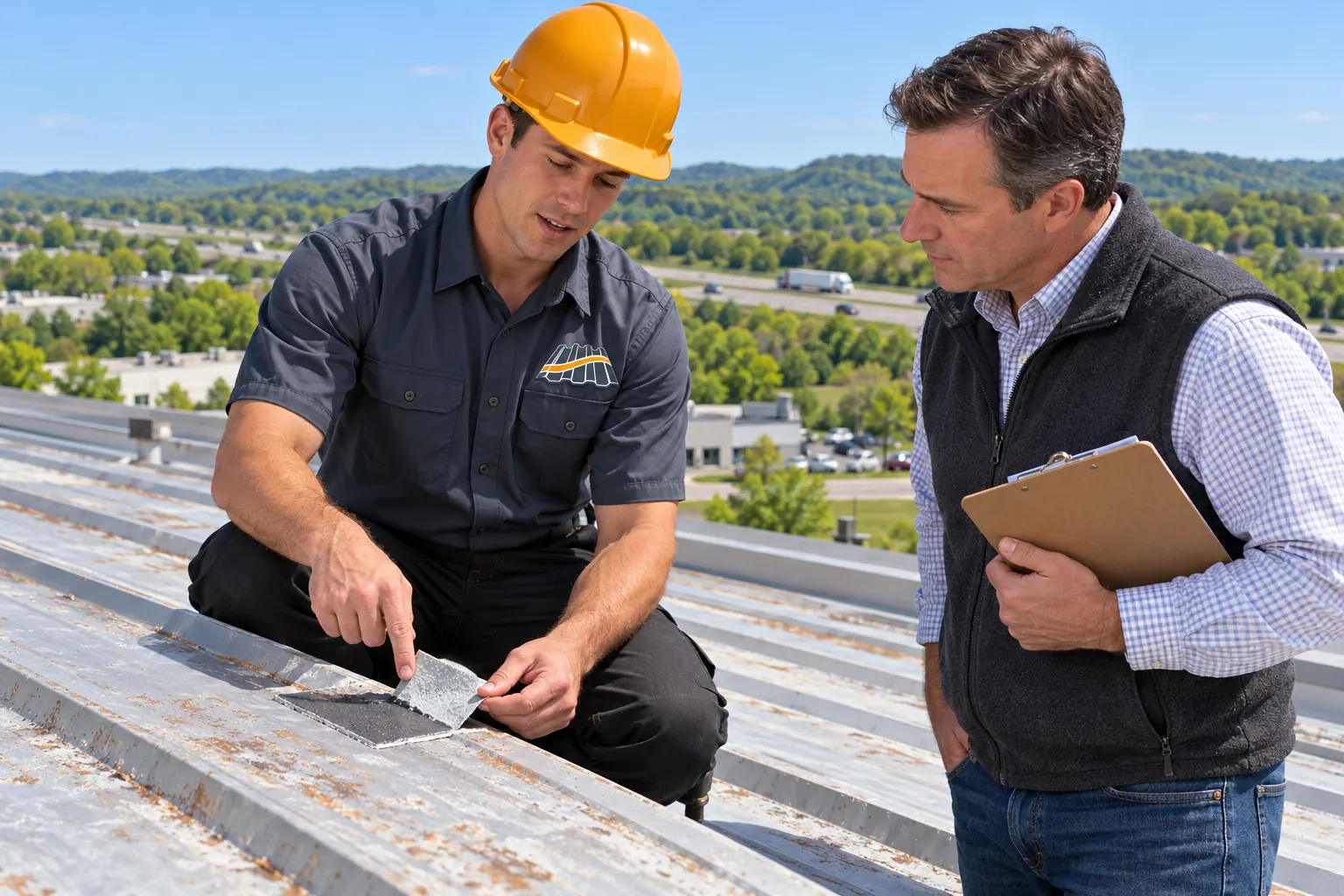
Roofer in a logo shirt showing a building owner an open lap on a metal roof panel1Walk The Low Spots
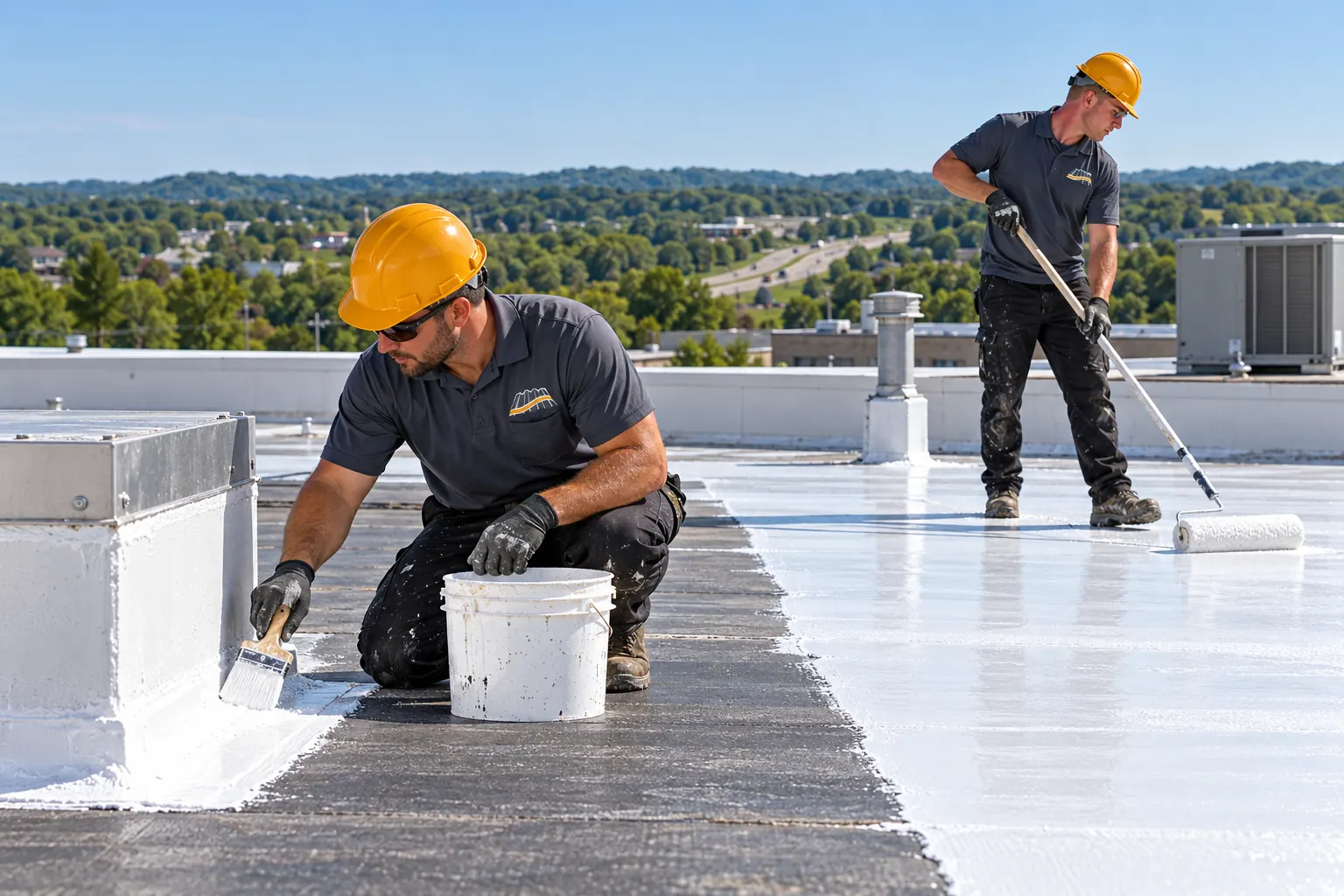
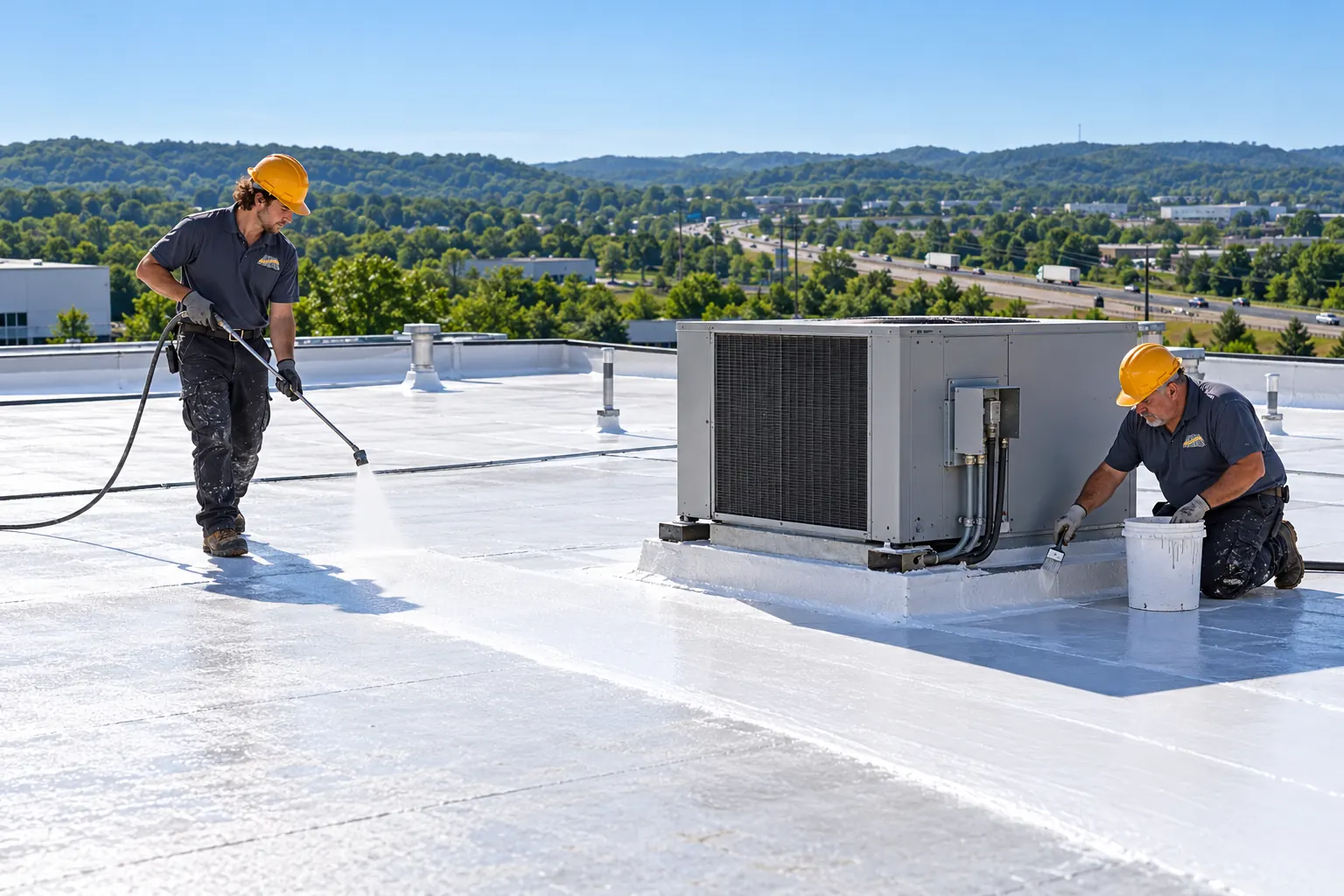
Roofers rolling white silicone coating around a rooftop HVAC unit2Roll The Silicone
  • Built for slow drainage
  • Laps sealed before coating
  • Silicone-only recoats
  • Grit added on walk paths

Is This Roof A Fit?

Silicone Or Another Top Coat?

Where water sits decides it. These cards compare a roof that wants silicone with one that does better under acrylic.

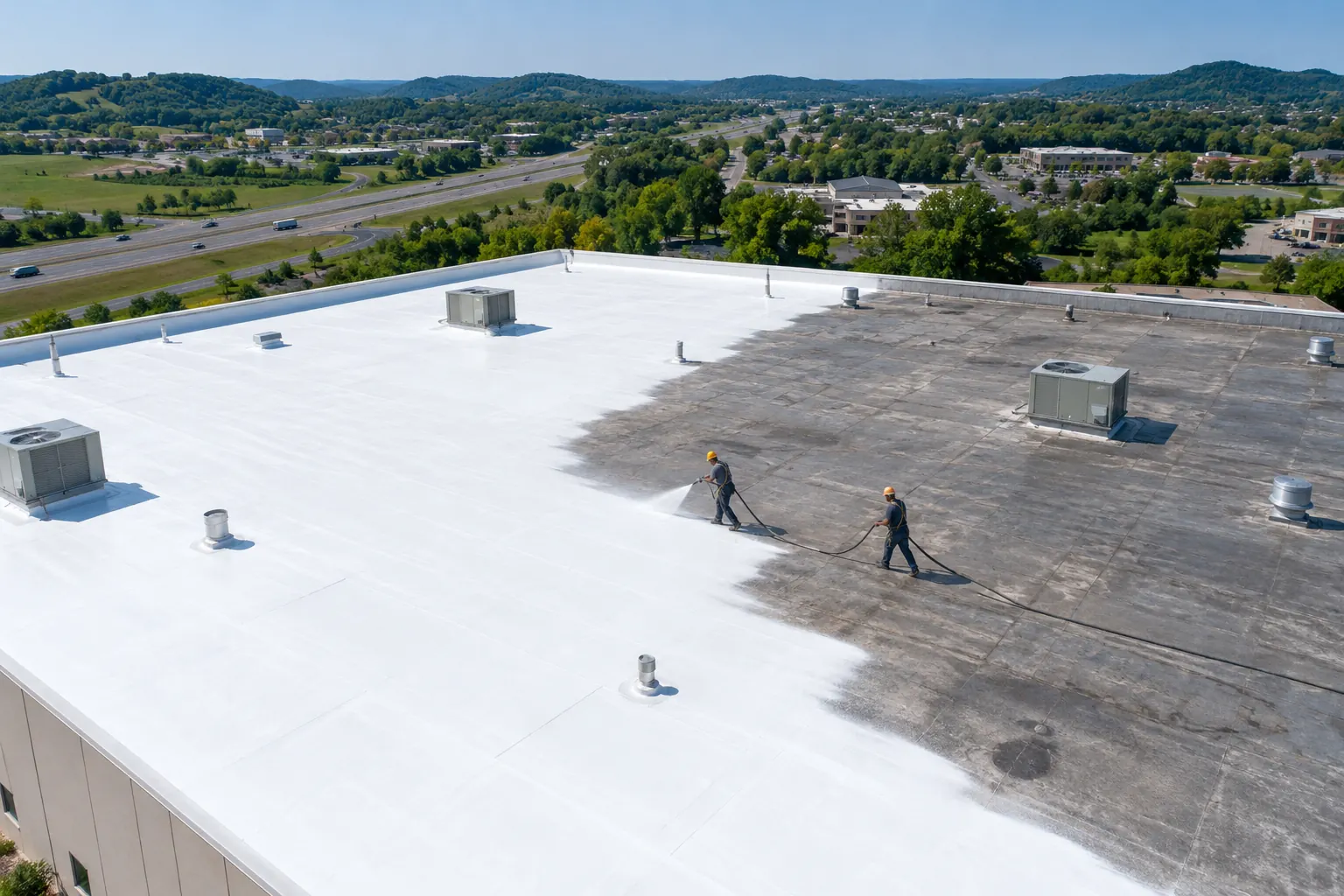
Aerial view of white silicone coating going onto a dark low-slope commercial roof

Water Lingers

Silicone Fits Here

Puddles that stay a day after rain along gutters, behind curbs, and above skylight panels point to silicone.

Pitch
Low; slow runoff near gutters
Standing Water
Holds up under it
Finish
White that dulls with dirt
Recoat
Silicone again only
Foot Traffic
Granules on walk paths
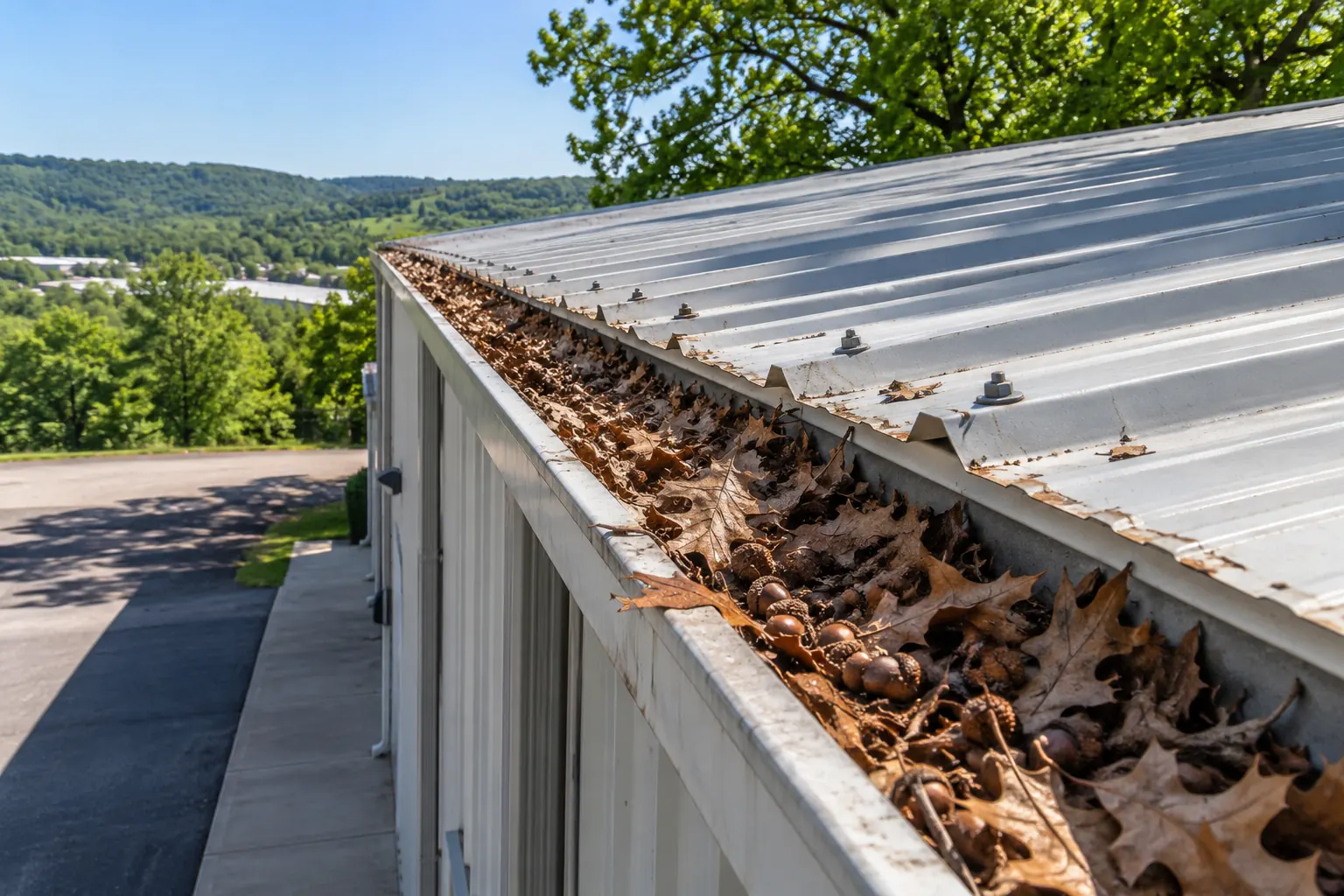
Gutter packed with leaves along the eave of a metal building roof

Water Sheds Fast

Acrylic Or Another Coat

Steeper panels that dry within hours of a storm rarely need silicone, and acrylic recoats more easily.

Pitch
Moderate; water clears quickly
Standing Water
Softens where it sits
Finish
Brighter, stays cleaner
Recoat
Acrylic over acrylic
Foot Traffic
Rougher finish underfoot

Wet Spots To Find

Where Water Sits On Your Roof

Silicone jobs start by finding every spot that holds water. These are the usual ones.

Watch keep an eye on it Repair First fix before coating Call Now water is getting in
  • Water Standing Behind Gutters

    Low-pitch eaves let rain back up along the gutter edge and under the trim.

    Watch
  • Puddles Upslope Of Curbs

    HVAC curbs and pipe supports dam the runoff, leaving rings of dirt where water sat.

    Watch
  • Water Trapped Above Skylights

    Translucent panels set flush in the field catch runoff along their upper edge.

    Repair First
  • Open End Laps In Low Spots

    Standing water at an end lap gets pulled under the upper panel and drips inside.

    Repair First
  • Clogged Downspouts

    Leaf jams turn a gutter into a trough that spills over the wall face.

    Watch
  • Stains Under The Low Side

    Ceiling stains along one wall follow the slow-draining side of the roof above.

    Call Now

Ways Silicone Gets Used

Commercial Roof Coating Options for Bowling Green

Silicone goes on the whole roof or only where water stays. The walk decides the layout.

Full Silicone System

Primer, seam fabric, and silicone across the entire roof suit low-pitch panels that drain slowly everywhere.

Silicone Strips At Low Spots

Gutter edges and curb backs get silicone while the faster-draining field takes acrylic.

Pairing with acrylic

Over Primed Steel

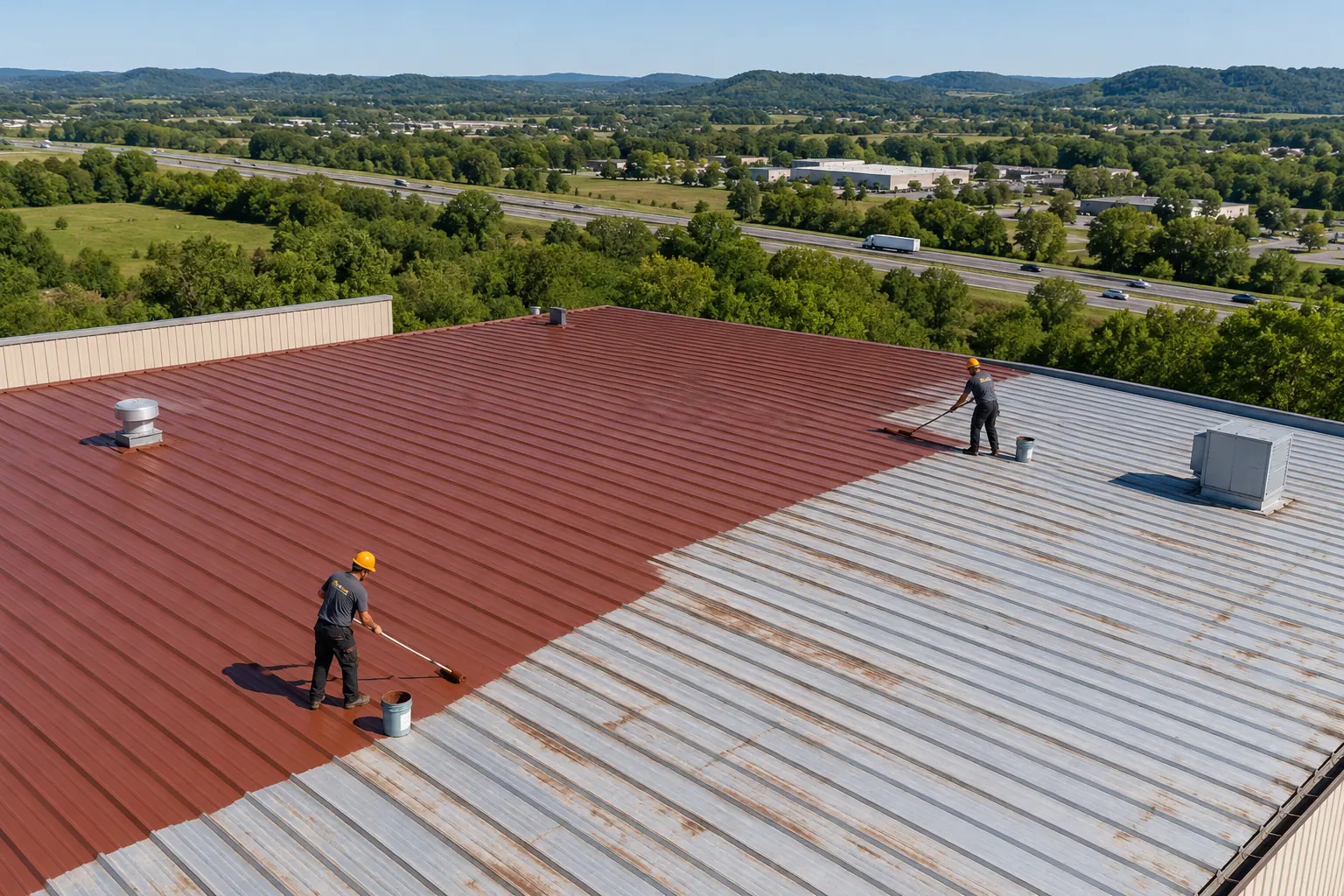
Rust-treated metal panels get the primer the silicone maker lists, then fabric at laps and a full silicone coat.

Metal panel prep

Silicone Recoat

An older silicone roof gets cleaned and recoated with silicone, since only silicone bonds well to it.

Why Silicone

Benefits of Coating Your Roof

Each one depends on dry insulation and sealed laps underneath. Those get checked first.

  • Holds Under Water

    Silicone resists breakdown where puddles sit along gutters and curbs, which wears water-based coatings soonest.

  • Stays Flexible In Sun

    Daily heating and cooling of the panels does not crack the film over laps and ridge caps.

  • Coat Over, Skip Tear-Off

    Existing panels stay in place, and the cost lands well below re-sheeting the roof.

  • Faster Rain Readiness

    Many silicone coating products resist rain soon after application, which helps in a wet Kentucky spring.

Puddles Still There A Day Later?

Send us a photo of where water sits after rain, or call and describe it. That spot shapes the whole silicone layout.

Silicone Sequence

Steps For A Silicone Coating

Low spots get mapped first, so the seams under them get the most attention.

Roofer taking moisture readings on a low-slope roof
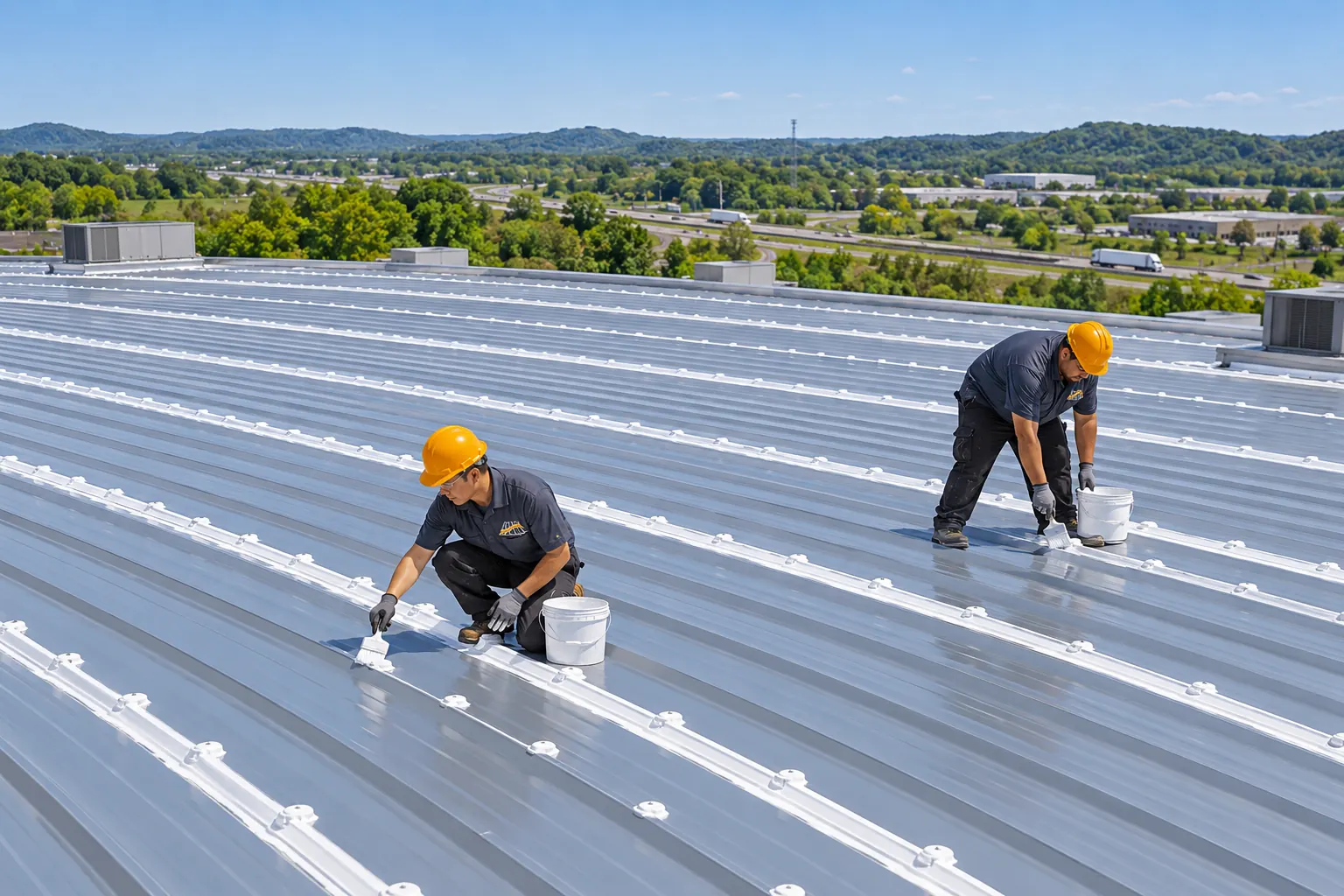
Crew sealing seams on a metal roof before silicone
  1. Inspect Your Roof

    We mark every spot where water stands, take moisture readings under those spots, and check gutters and downspouts for jams.

  2. Clean The Surface

    Dirt and chalk come off with pressure washing, and gutters get cleared so rinse water drains away from the walls.

  3. Prime Where Needed

    Rusted steel and old coatings get the primer the silicone maker lists, plus test patches to confirm the bond.

  4. Seal Laps And Curbs

    End laps in low areas, curb flashings, and skylight edges get fabric set in silicone base coat.

  5. Roll The Silicone

    Silicone goes on in one or two passes to the specified mils, with granules broadcast on walk paths to rooftop units.

Related Work

Other Coatings For The Same Building

Silicone work often sits beside one of these on the same building.

Silicone Answers

Questions About Silicone Coatings

Straight answers on where silicone works and what it asks of the roof.

Best Fit

When does silicone make sense on a metal building?

When water lingers: low-pitch panels near gutters, around curbs, or behind skylight panels that dam runoff. Silicone resists standing water and sunlight better than acrylic.

It holds dirt, which dulls the white over time, and it gets slick when wet or frosty, so walk paths need granules.

Recoating

Can we switch to another coating later?

Only silicone bonds well to old silicone, so the first choice sets every future recoat.

That is worth weighing on roofs where acrylic would also work. Ask for the product name on your invoice so the next crew knows what is up there.

Seam Prep

How are laps and seams sealed before silicone?

Side laps, end laps, and seams get cleaned and sealed with reinforcing fabric in a base coat or a seam sealant made for that system.

End laps leak most, because runoff gets pulled under the upper panel. Ridge caps, curbs, pipe and skylight flashings, and gutter seams get the same treatment.

Roof Types

How does prep differ for standing seam and exposed-fastener roofs?

Exposed-fastener roofs need every screw tightened, replaced where stripped, and sealed. Standing seam roofs hide their clips, so the work moves to seams, end laps, and trim.

Both get cleaned, rust treated, and primed with the listed primer before silicone goes on.

Weather Window

What weather does a silicone job need?

Dry panels and no rain until the coat sets. Silicone handles cooler temperatures better than acrylic, but dew on the roof still delays the start each morning.

Spring and fall mornings in Warren County often start wet, so crews begin once the panels dry and stop with daylight to spare.

Foot Traffic

How do technicians walk on a silicone roof safely?

Silicone turns slick when wet or frosty, so the paths to rooftop units, hatches, and drains get granules broadcast into the last coat or a textured walk-pad product.

Those paths also protect the film from dropped screws and tool scrapes. Ask your HVAC service company to stay on them, and report any gouge so it gets patched before water reaches the steel.

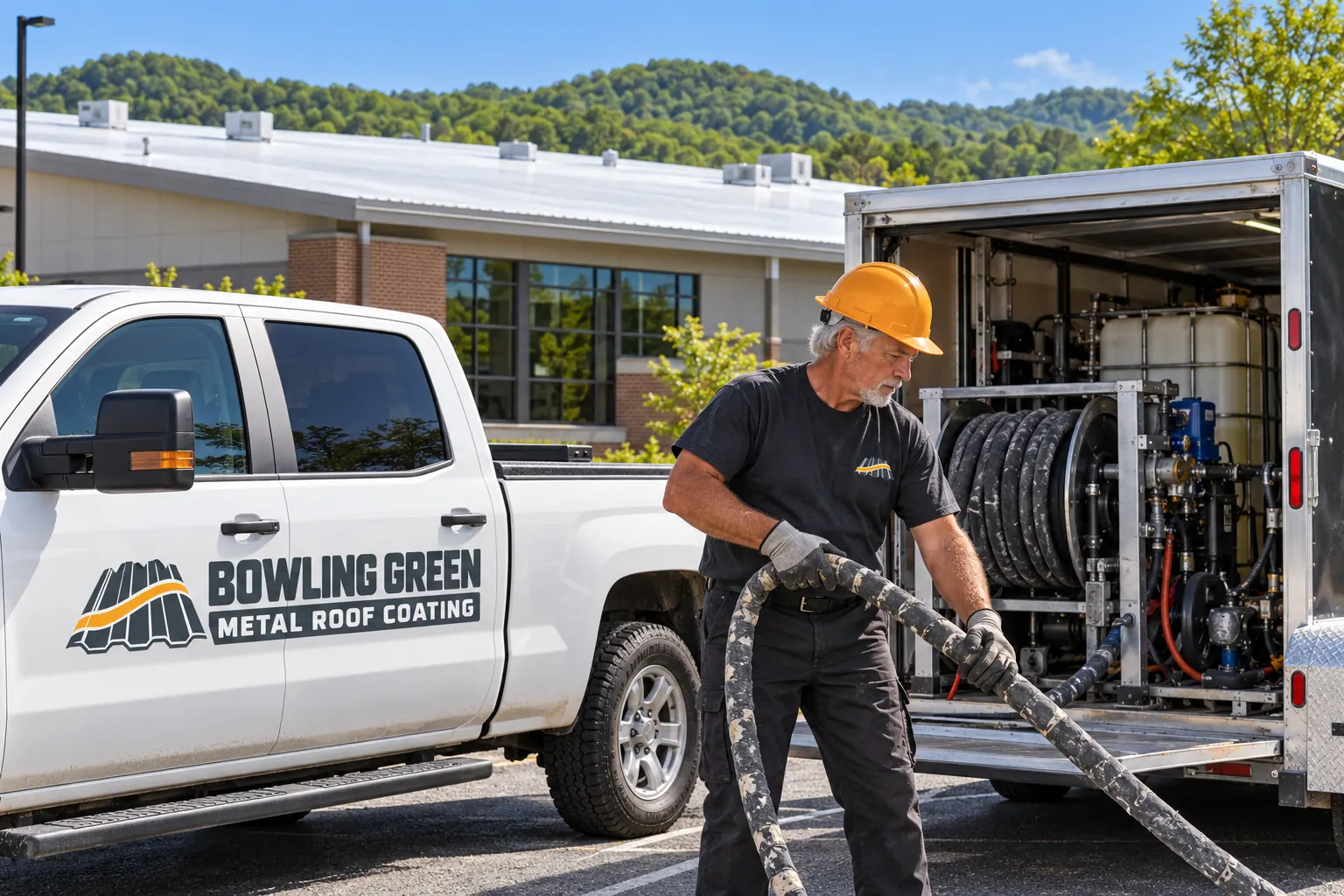
Roofer pulling coating hose from a spray rig trailer beside a logo truck in a commercial lot

Plan Silicone For Your Low Spots

Tell us the roof size and where water sits. We follow up to walk the roof and map the wet areas with you.

Call Us (270) 236-5206