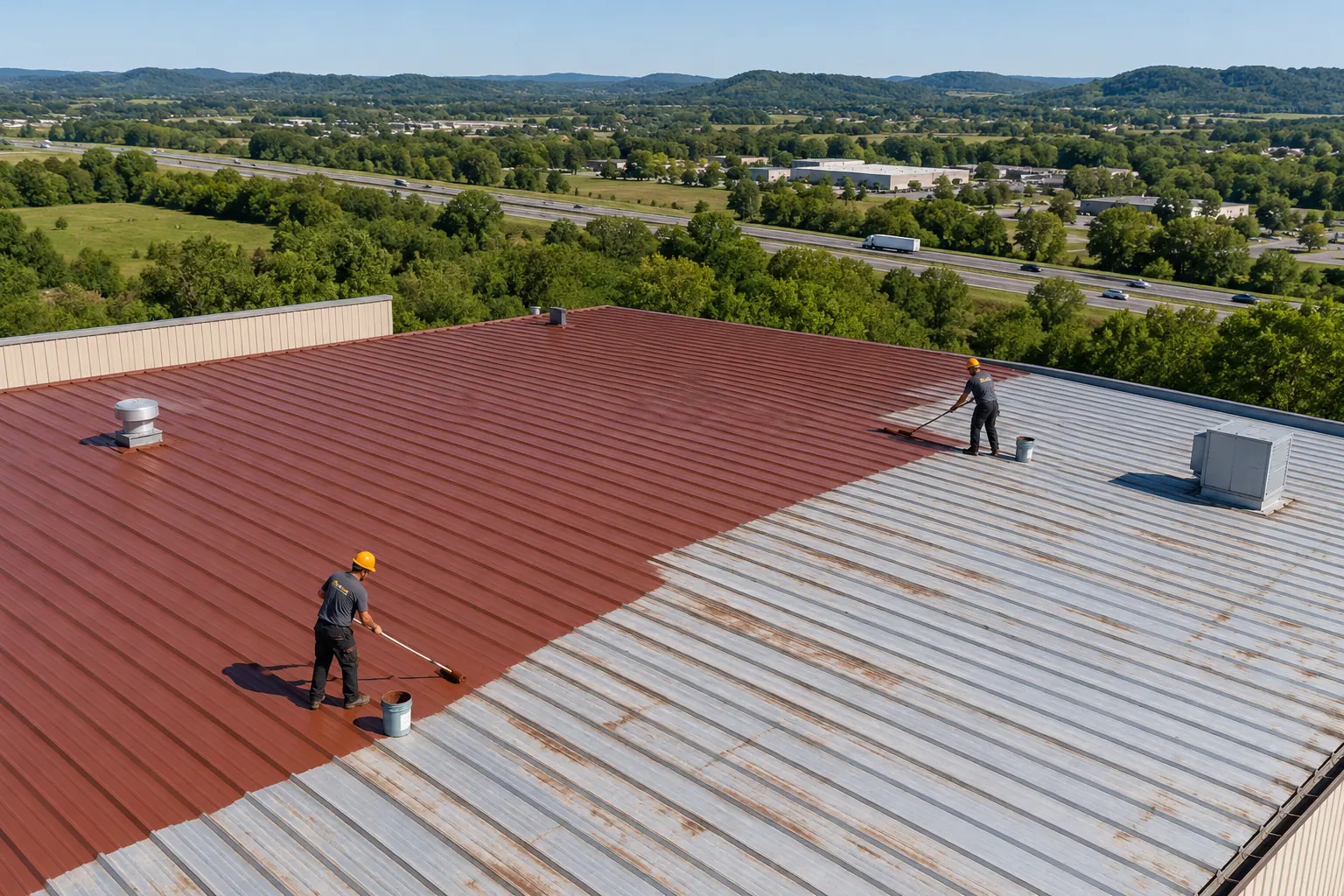
Metal Roof Coating
Rusted R-panel and standing seam roofs get screws sealed, laps reinforced, and primer on bare steel.
Metal roof coating
Coating Services · Bowling Green
Commercial roof coating services for metal, flat, foam, and shingle roofs. We walk the roof, then match the system to its pitch and condition.
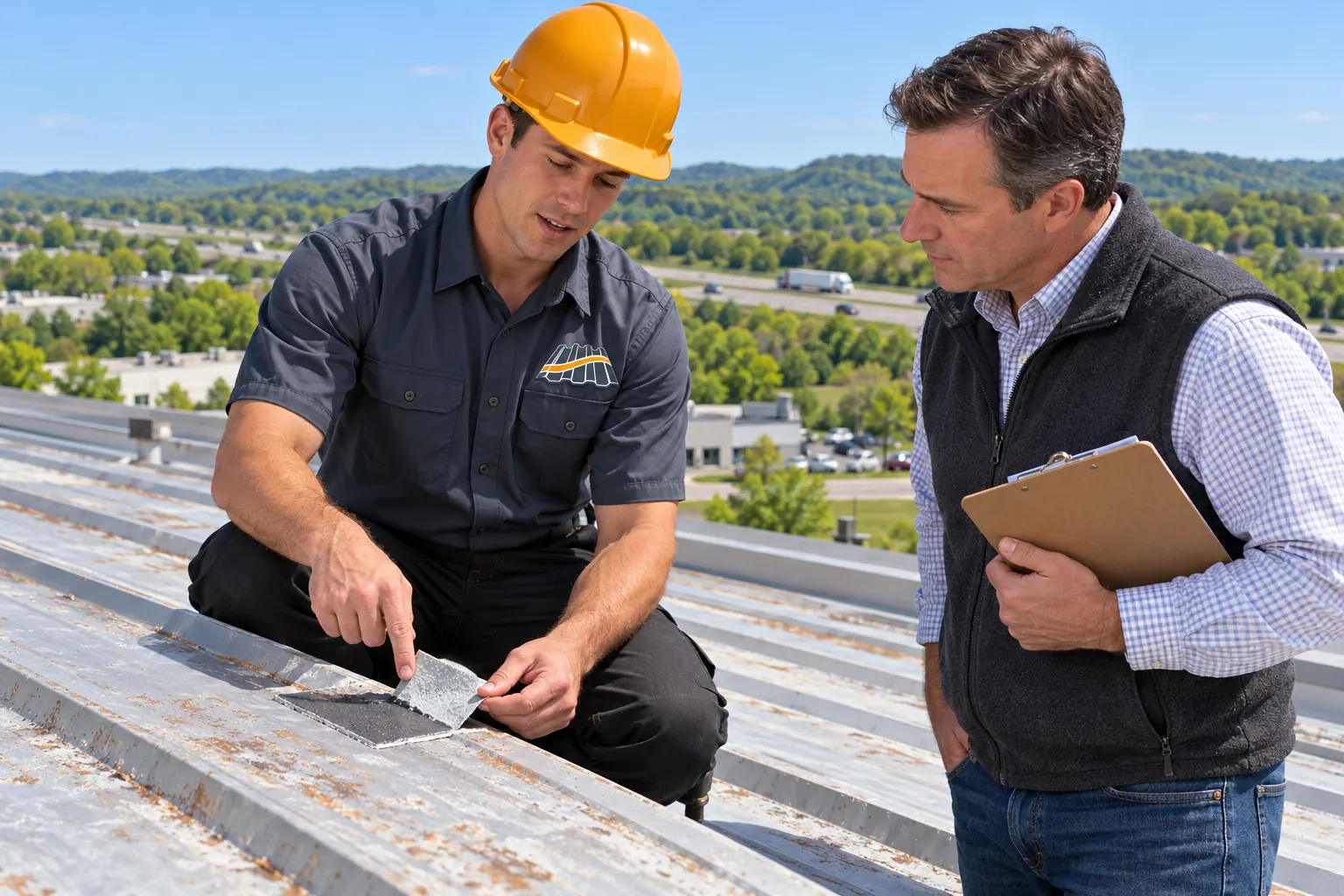 1Walk The Roof
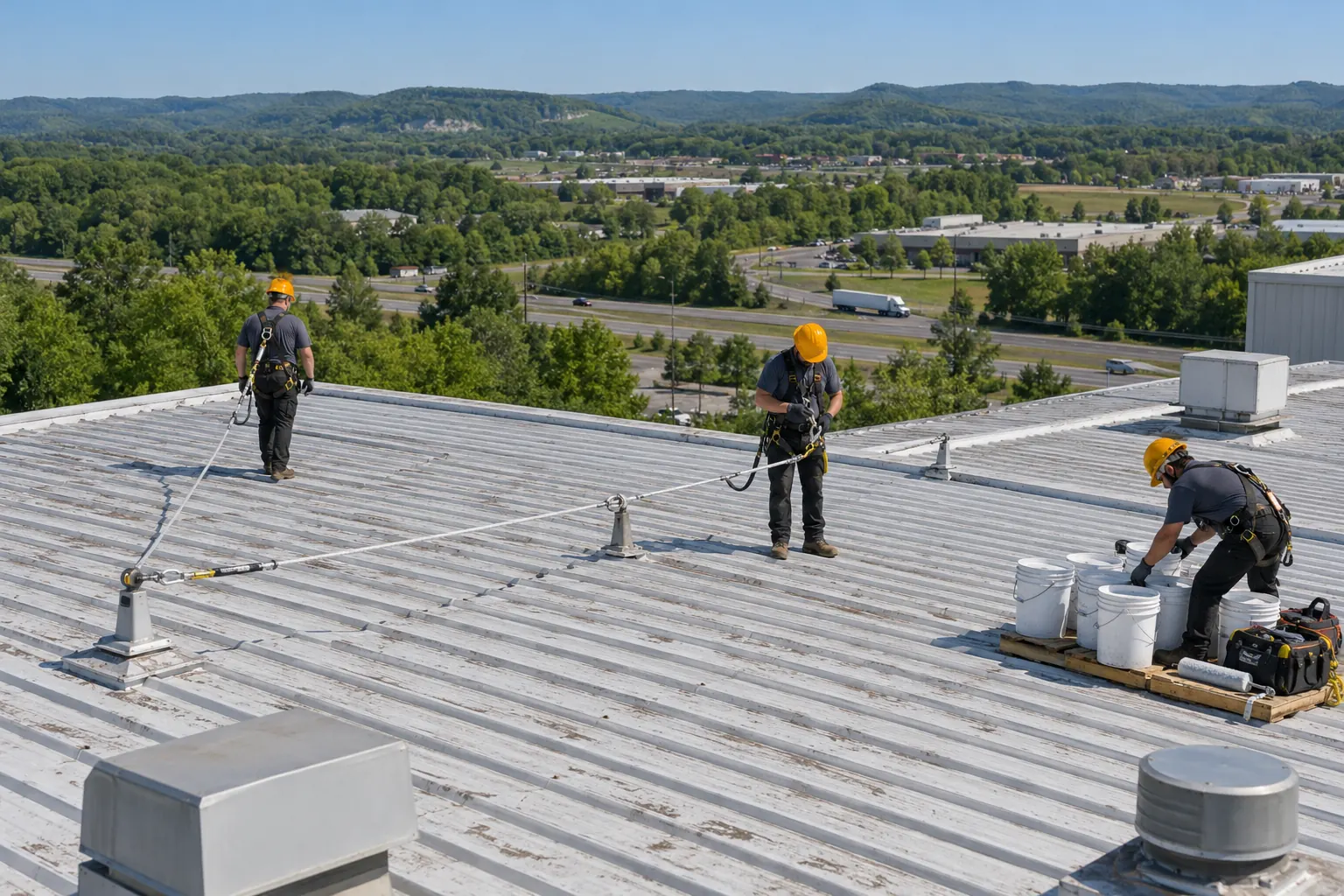 2Stage The Coating
Five Systems
Each one fits a different roof. The fit line tells you where to start.
Rusted R-panel and standing seam roofs get screws sealed, laps reinforced, and primer on bare steel.
Metal roof coating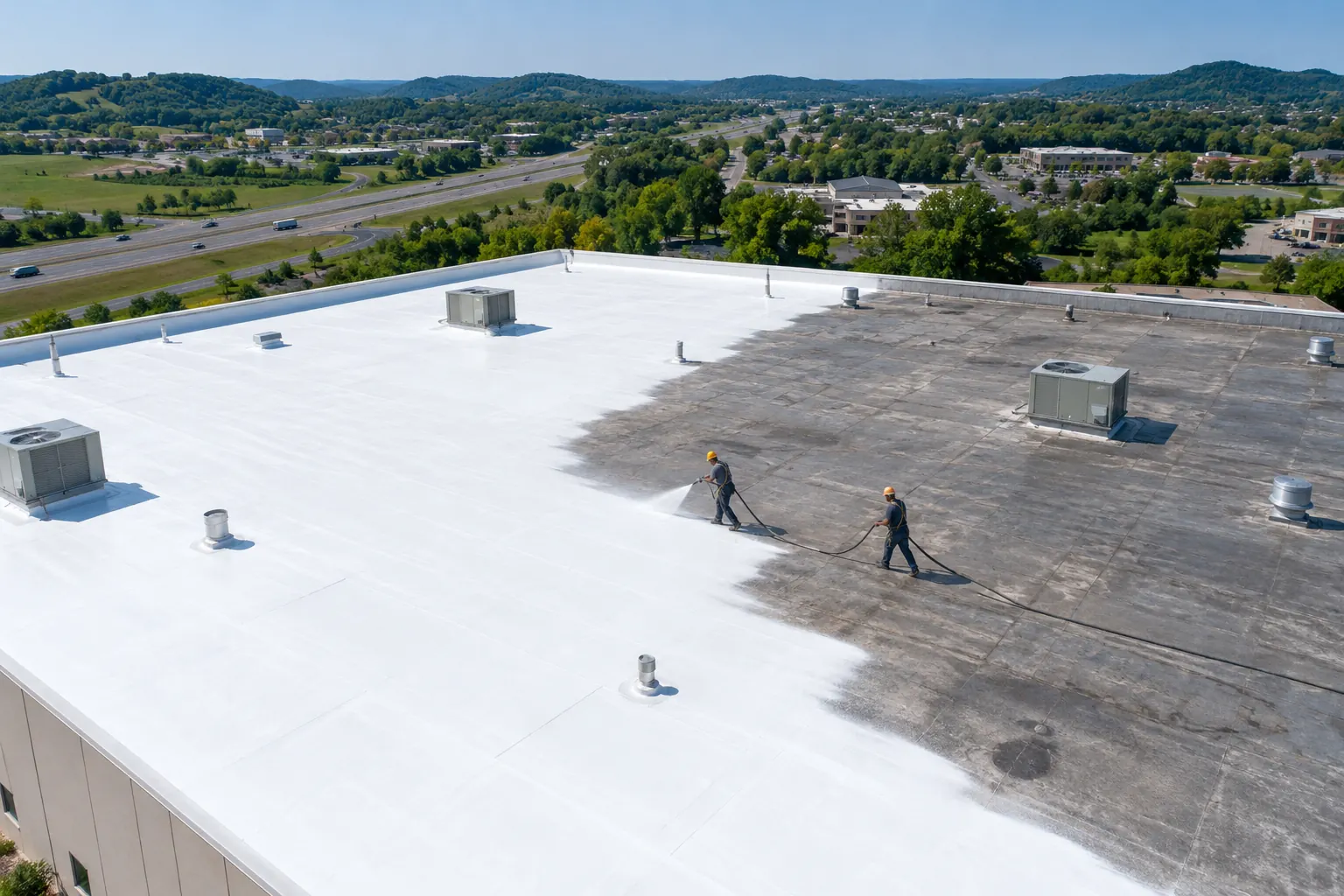
Slow-draining panels and flat sections where puddles sit a day after rain.
Silicone roof coating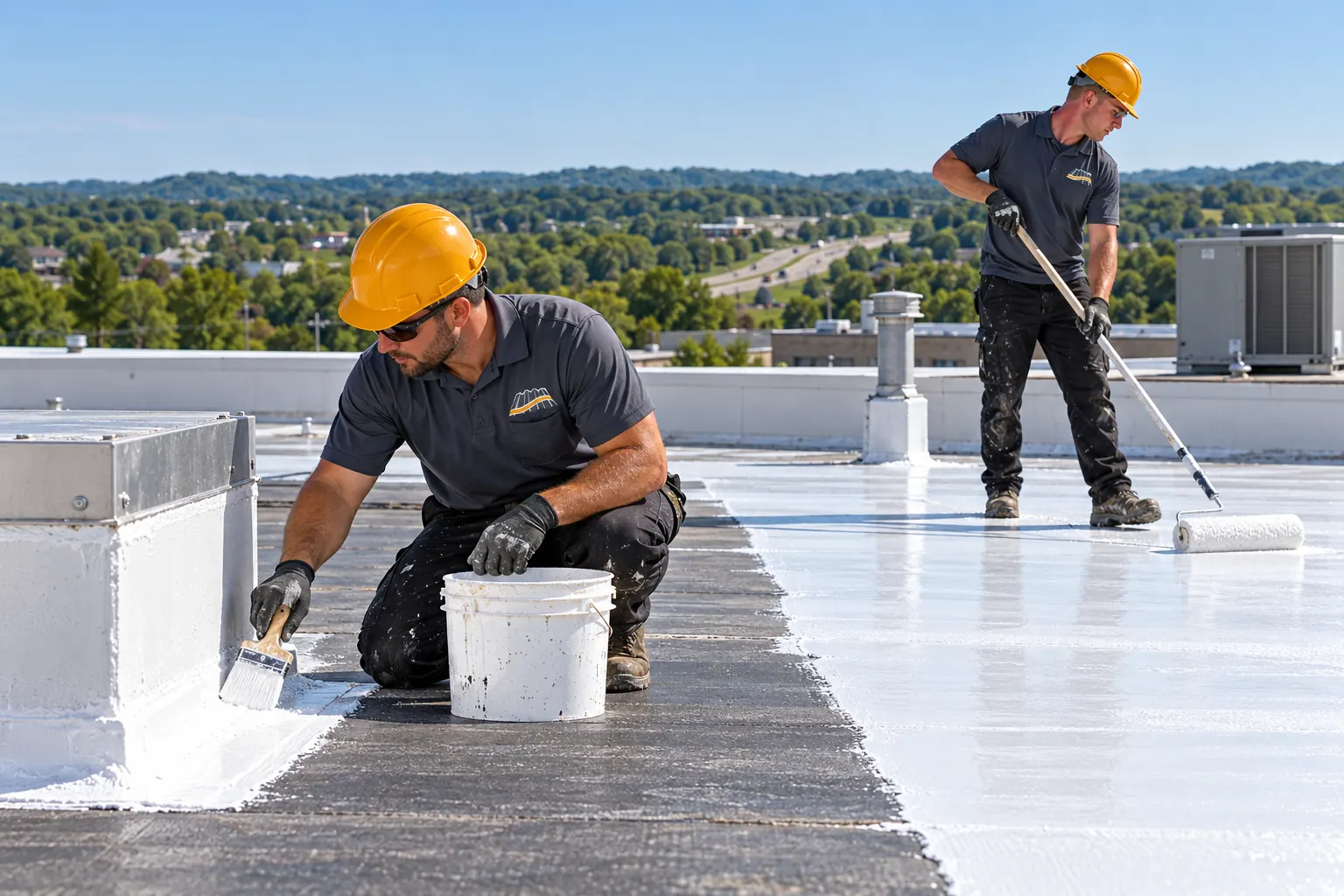
Pitched metal that drains fast and gets a bright white finish in dry weather.
Acrylic roof coating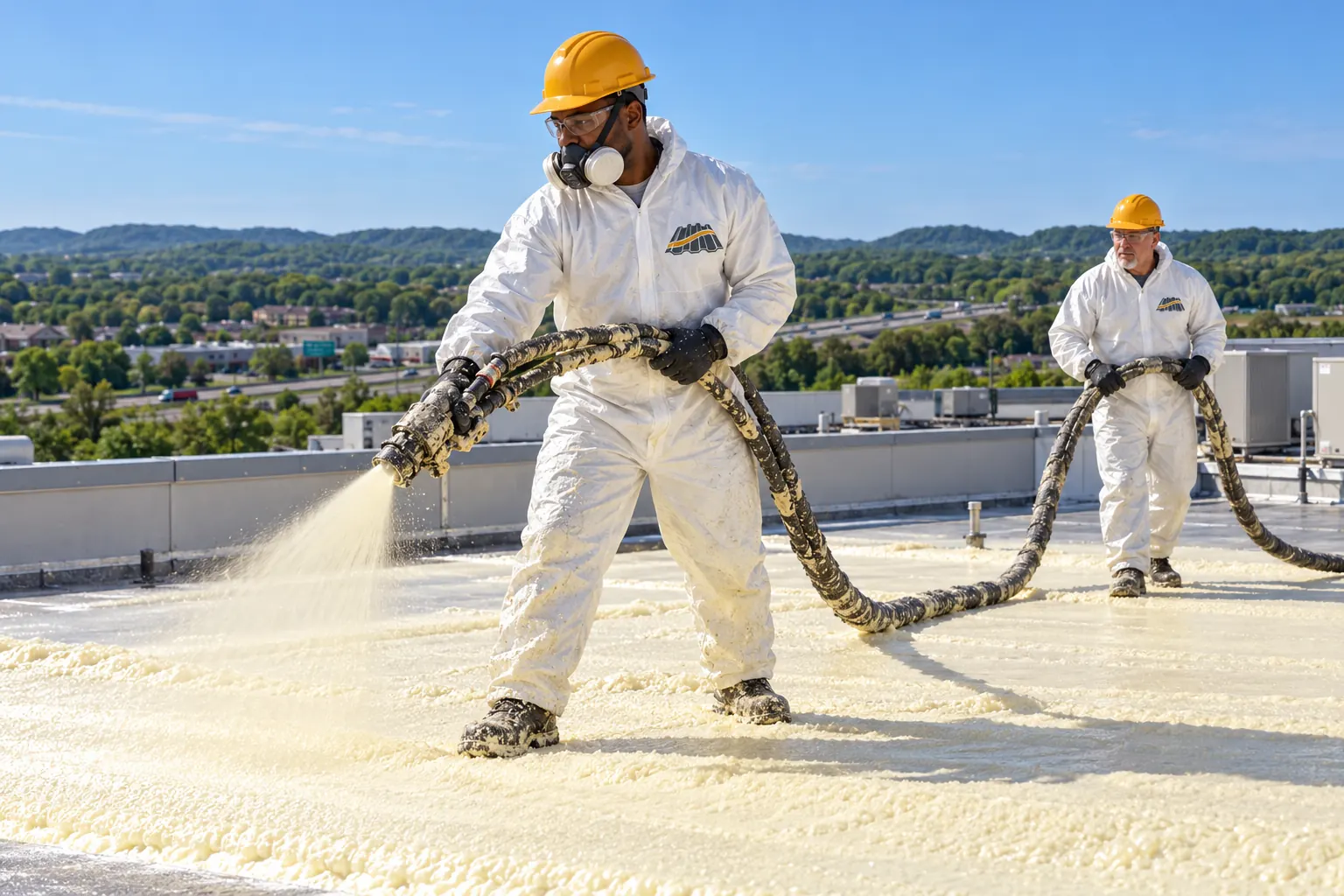
Closed-cell foam over uninsulated steel that sweats, topped with a protective coat.
Spray foam roofing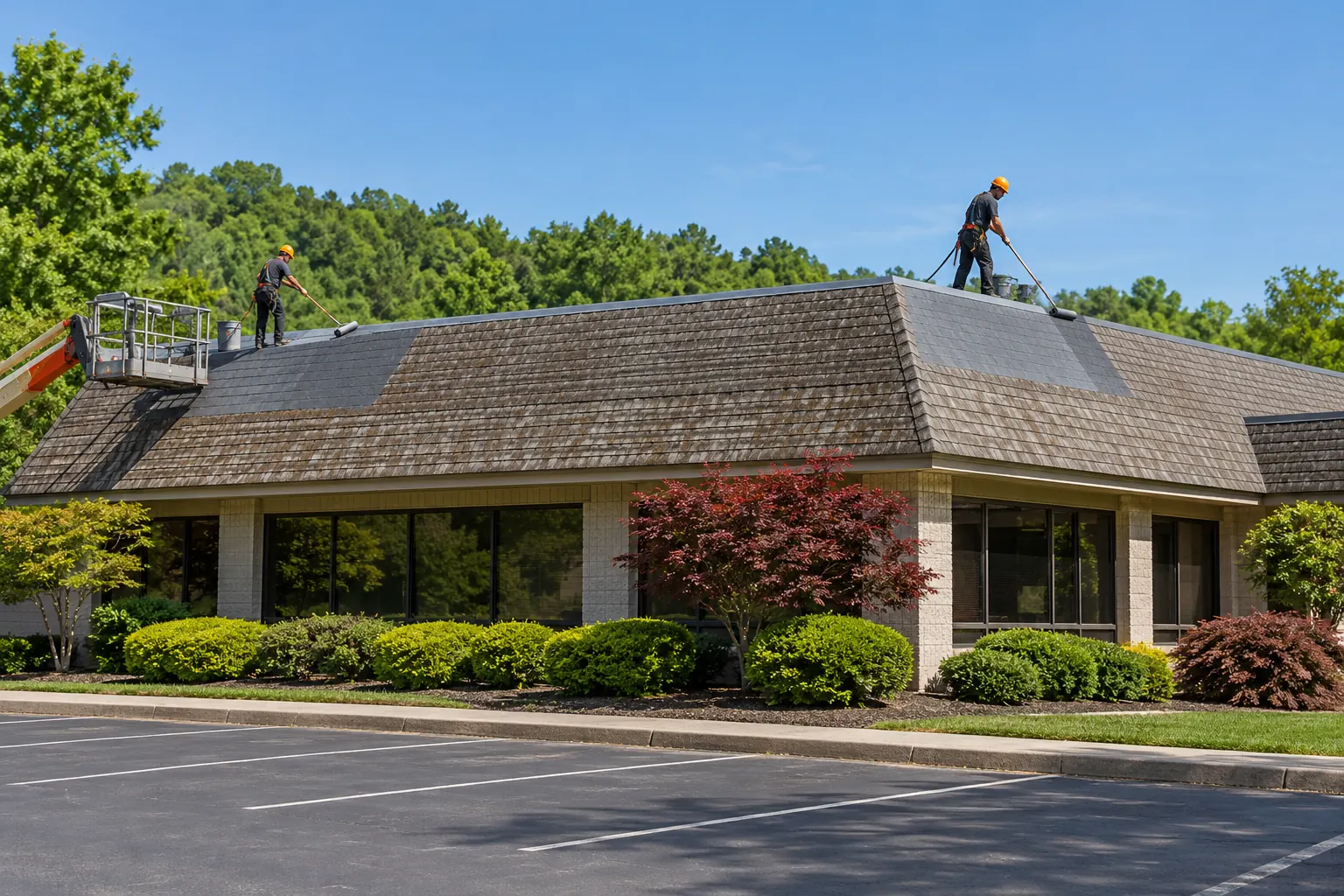
Commercial shingles that still lie flat and hold granules, with maker approval.
Shingle roof coatingWhich System Fits Which Roof
Most metal roofs come down to these two top coats. Foam and shingle work are covered in the cards above.
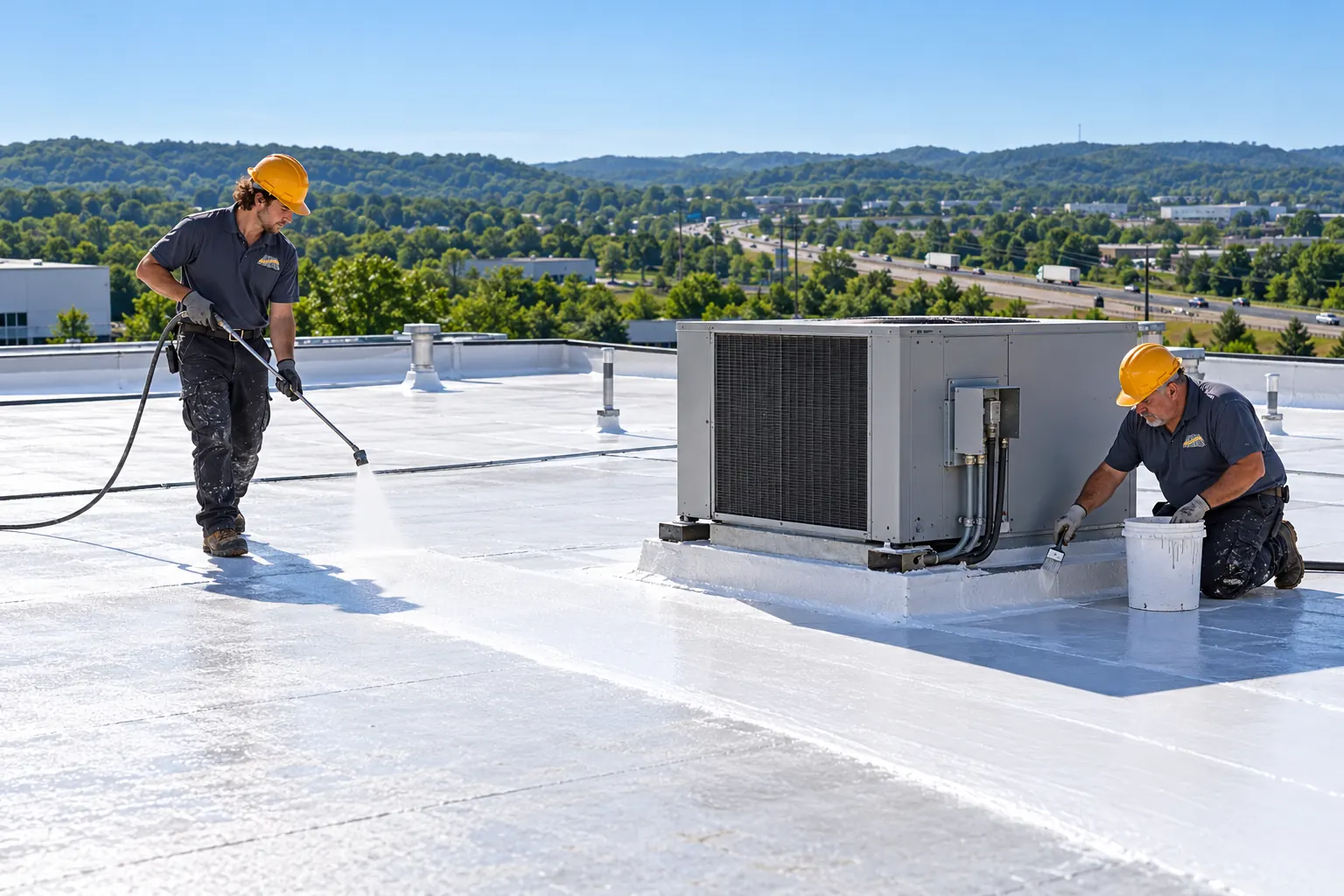
Slow Drainage
Water that stays near gutters and curbs points here, and the choice sets every future recoat.
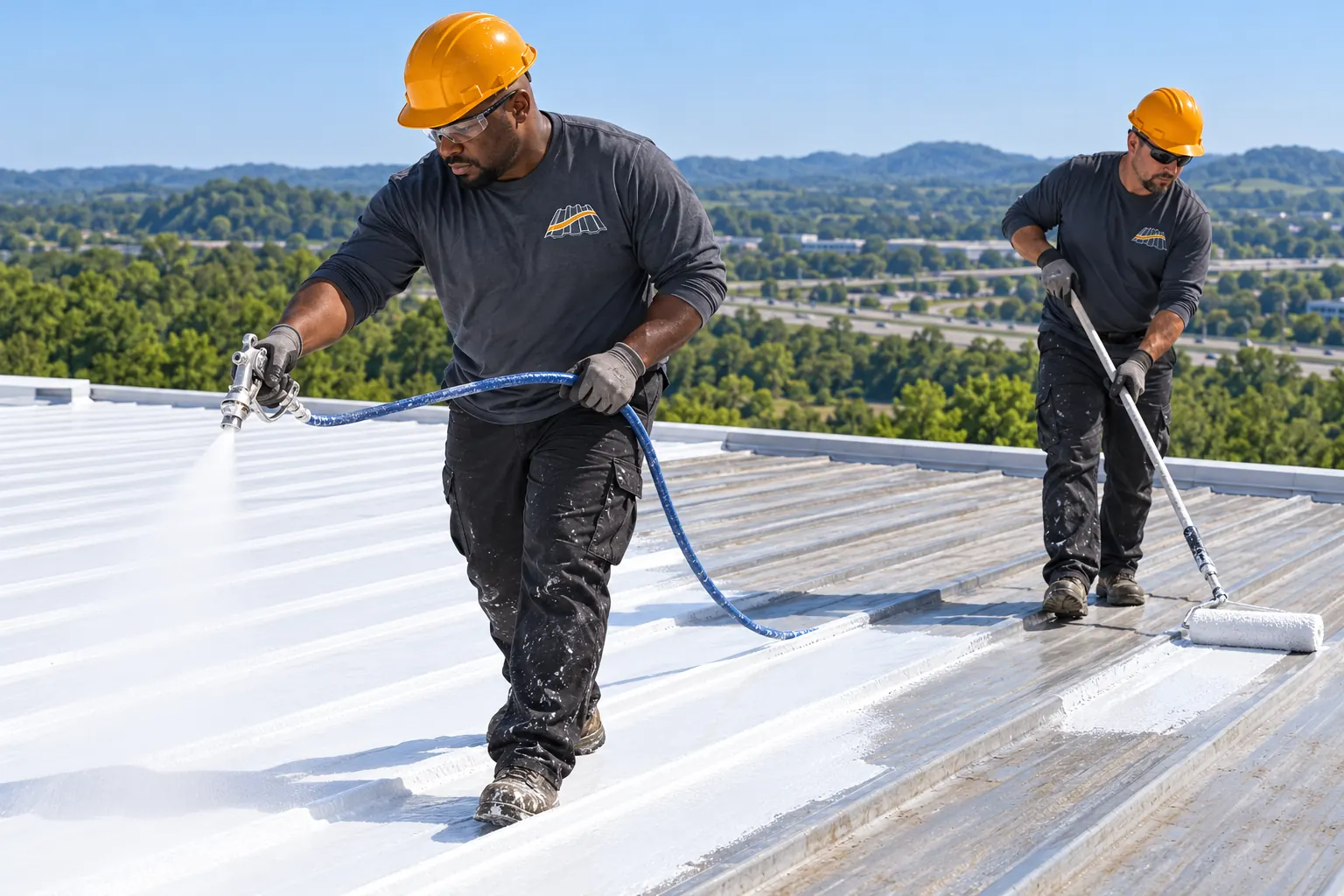
Fast Drainage
Panels that dry within hours of rain suit acrylic and its easy recoats.
Call us with the roof type and where it leaks. The roof walk settles the system before any price.
Shared Process
The top coat changes between systems. The order of work stays the same.
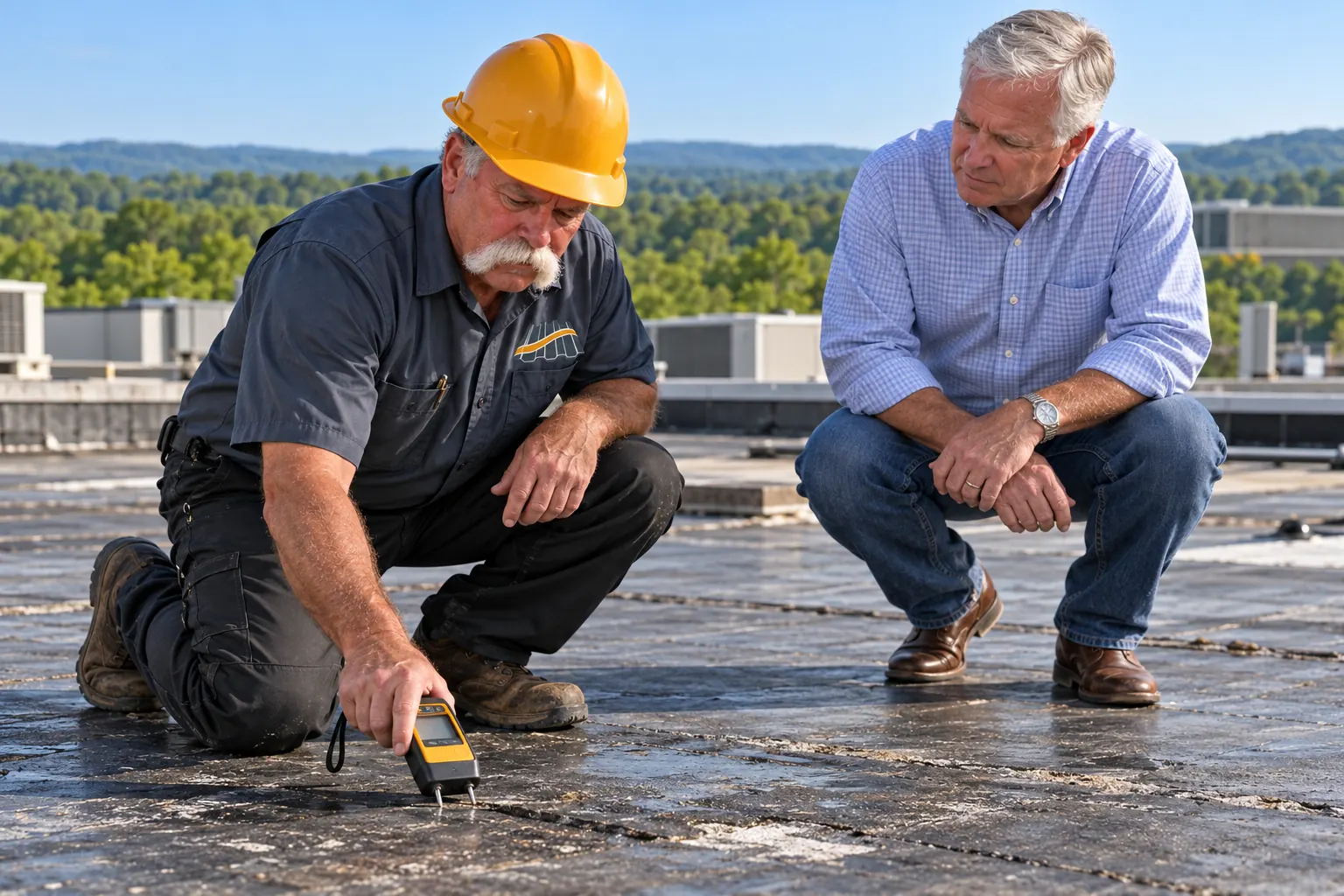
A full roof walk tests screws, probes rust, checks curbs and skylights, and takes moisture readings.
Pitch, drainage, insulation, and foot traffic point to metal coating, silicone, acrylic, foam, or a shingle gate.
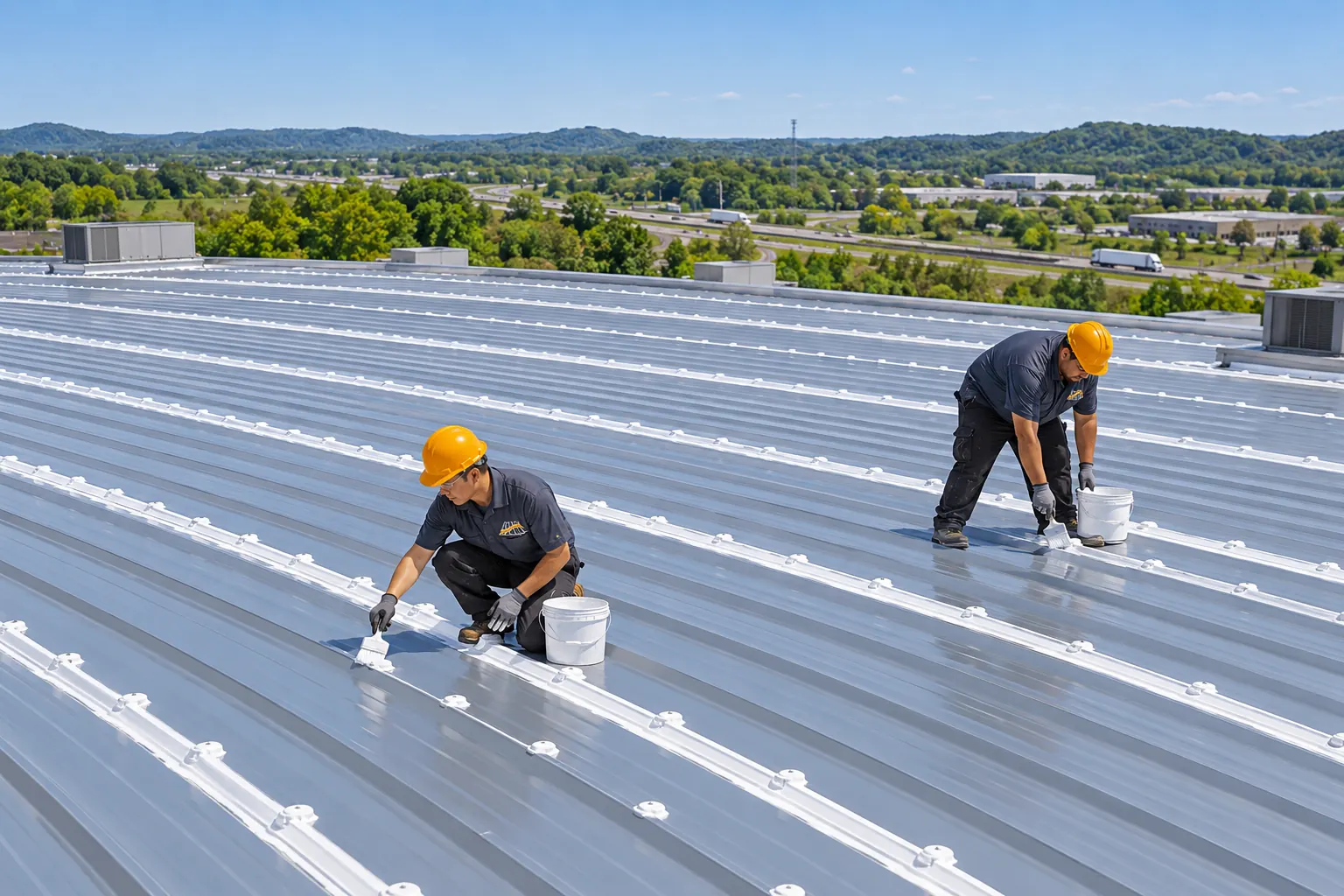
Holed panels get patched, screws replaced, and the surface washed with a cleaner matched to it.
Bare steel gets primer, and laps, curbs, and flashings get fabric in base coat.
Top coats go on to the specified mils, checked with a gauge as the crew works.
Service Questions
How owners narrow down the right system.
Candidate Buildings
Exposed-fastener buildings with surface rust and leaking laps over firm steel: warehouses and light plants with R-panel, farm shops and barns, church halls and gyms, self-storage rows, and auto shops.
Rusted-through panels, sagging purlins, or wet insulation get handled first.
Coating Types
The one that matches pitch, drainage, and foot traffic. Silicone suits slow drainage, acrylic suits fast-draining sloped panels, and urethane makes a tough base at seams and walk paths.
The coating maker's product data and primer list settle which pairings work.
Steps
Inspect the roof, clean it, repair holes and fasteners, prime rust and galvanized areas, seal fasteners and laps, then apply base and top coats.
Wet-film gauges confirm thickness, and weather and repair work set the pace more than size.
Mixing Systems
Yes. A common setup puts silicone along slow gutters and acrylic across the faster-draining field.
The two have to be compatible, which the coating maker confirms.
Lifespan
That depends on the product, the thickness applied, and how the roof is used. The product sheet lists what the maker expects.
Yearly roof walks and clean gutters keep it on track, and a worn top coat gets recoated.
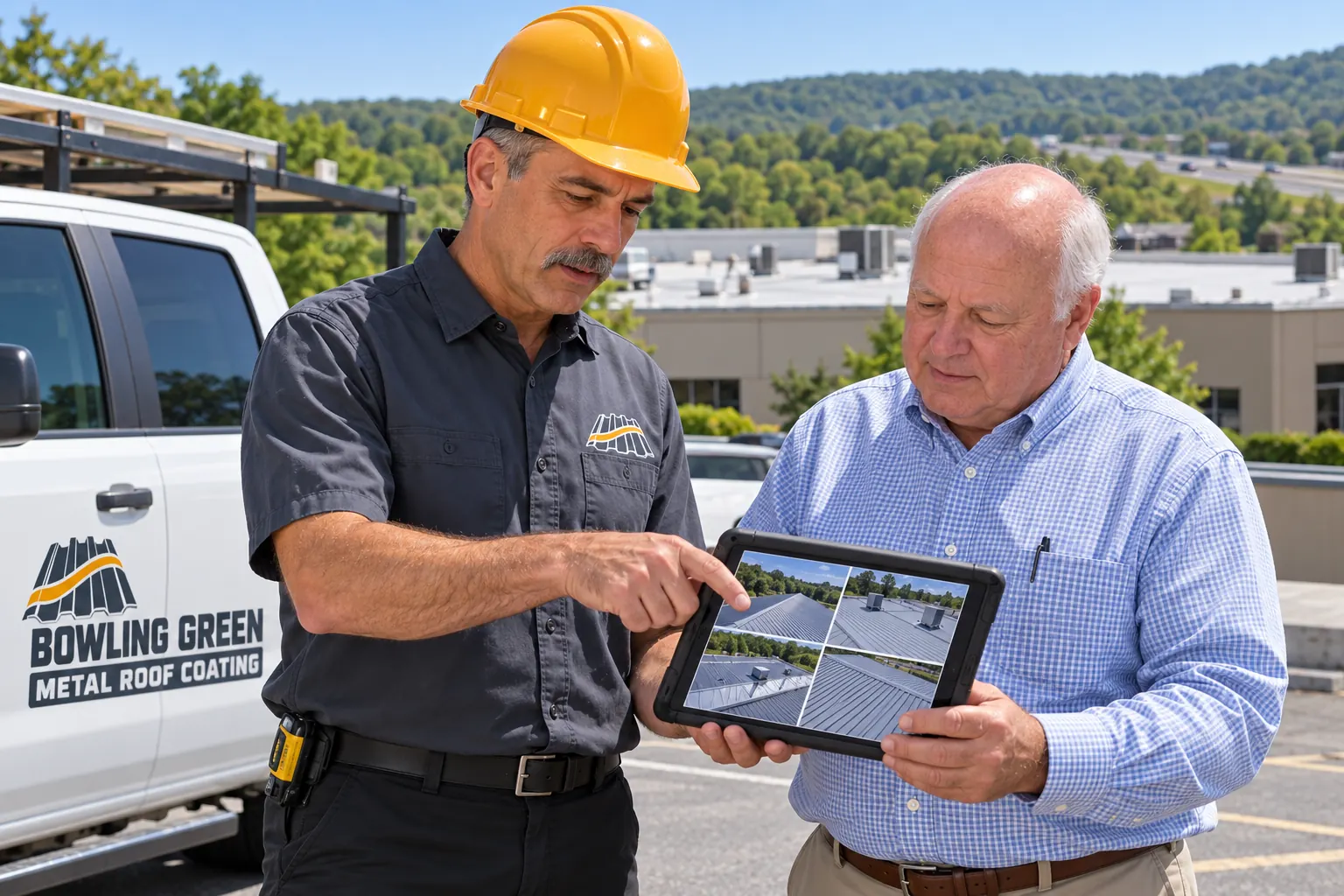
Send the roof size, type, and condition. We follow up to walk it and recommend one system.
Leave a name and number and we will call you back about your commercial roof. Or call now: (270) 236-5206.